
Admiral Execute
A freight system where the dock knows not just who arrived
When a truck arrives, the dock sees the full execution context: which load it’s here for, who authorized the change, and why it’s allowed right now. That authorization travels across companies and workflows (carrier, intermediary, and shipper), so the dock doesn’t re-check paperwork. When connected with Admiral Enforce, trailers and sites enforce that authorization physically.
For teams managing dispatch, gates, yards, and docks
The execution gap
The freight industry already has ways to establish whether a company is legitimate. The real gap appears during execution: when a specific request arrives and a shipper team must decide whether to authorize it. That moment of ambiguity creates opportunities for fraud, disputes, and honest mistakes that often surface at the dock.
Admiral Resolve closes that decision gap. It gives shipper teams clarity when it matters: who the request came from, which company they represents, and whether that request is allowed for that specific load. For many shippers, that alone significantly reduces risk.
But once a request is approved, shipper ops teams are still responsible for making sure execution actually follows that decision across docks, yards, partners, and time. That’s where friction and exposure return. Admiral Execute removes that burden.
From authorized decisions to authorized execution
When a change is approved (an appointment update, an early arrival, a carrier swap), Admiral Execute turns that approval into execution state that follows the load across companies. Dispatch, dock, yard, and gate all see the same authorized context. There’s no re-verification, and no last-minute judgment calls at the dock. Execution simply follows what shipper ops already approved.
One example of how execution plays out at the dock: A carrier dispatcher rebooks a load within shipper-established guidelines. When the truck arrives, the dock already sees:
- which load it’s here for
- who authorized the change
- why the timing is allowed
There’s nothing to interpret and nothing to re-check. The reason is already clear. No escalations. When working with Admiral-enabled carriers, that same authorization is backed by physical guardrails. Trailers don’t open or move unless the authorization is valid.
Execution feels calm because the decision already happened upstream.
What you gain

Wrong Loads Can’t Proceed
Loading only proceeds when the right trailer is in the right place, eliminating misloads, maintenance violations, and exception-driven fraud.

The Wrong Trailer Can’t Move
Prevent mis-pulls and unauthorized hookups. Drivers can’t connect to the wrong trailer, and loaded assets can’t be accessed without authorization.

Control Persists After Departure
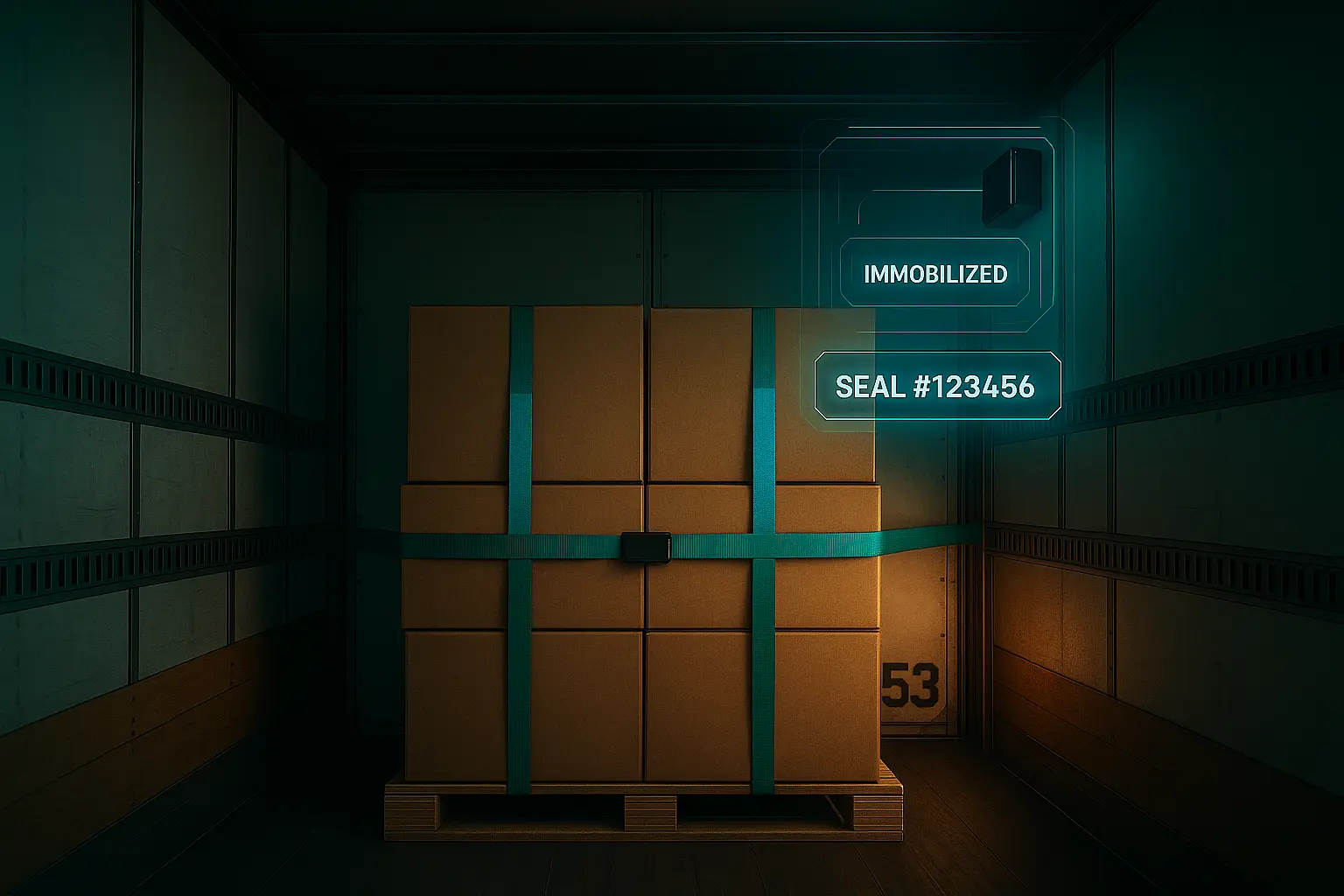
Retain control over cargo access beyond checkout. In-transit access and detours remain restricted until ownership is explicitly transferred
How Execute works in practice
Execute aligns what your systems say is allowed with what can actually happen in the yard. The yard can no longer contradict the screen.
Define boundaries
You set the rules execution must follow: time windows, trailers, docks, handoffs, substitutions, and swaps.
Carrier operations
Carriers book, adjust, and execute work normally within approved bounds, exceptions approved as needed.
Assets and buildings
Rules propagate to trailers, docks, and across facilities and companies. Invalid actions are physically prevented.
Software guardrails
Your workflows, dashboards, and alerts continue to operate as they do today. Execute backs them up.
How you start with Execute

Zero setup
Integration
Who Execute is for
Execute is for teams responsible for making sure the right thing happens at execution, especially when decisions are made upstream and carried out somewhere else. It works alongside your existing systems and partners.
Shippers
Ensure pickups, releases, and changes execute under the right conditions, even as timing, carriers, or routes shift.
Intermediaries & 3PLs
Coordinate execution across shippers and carriers without relying on forwarded emails or manual confirmation.
BCOs & Consignees
Control when and by whom inbound freight can be accessed. Authorization to open or unload can transfer to the consignee based on shipper policy or agreement. Get clear proof of custody and release, reducing exposure to post-delivery disputes.
Carriers
Protect drivers and dispatch from impersonation and misdirection like fake reroute requests or unauthorized carrier swaps. Execute ensures drivers only act on changes that were explicitly authorized, recognized by the shipper, and tied to the correct load.
Start where your responsibility begins
Ready to try with zero setup? Sign in now, or contact us to walk through your execution gaps and see where Execute fits.