
Stop Thefts Before They Move: Cargo Theft Prevention for Fleets
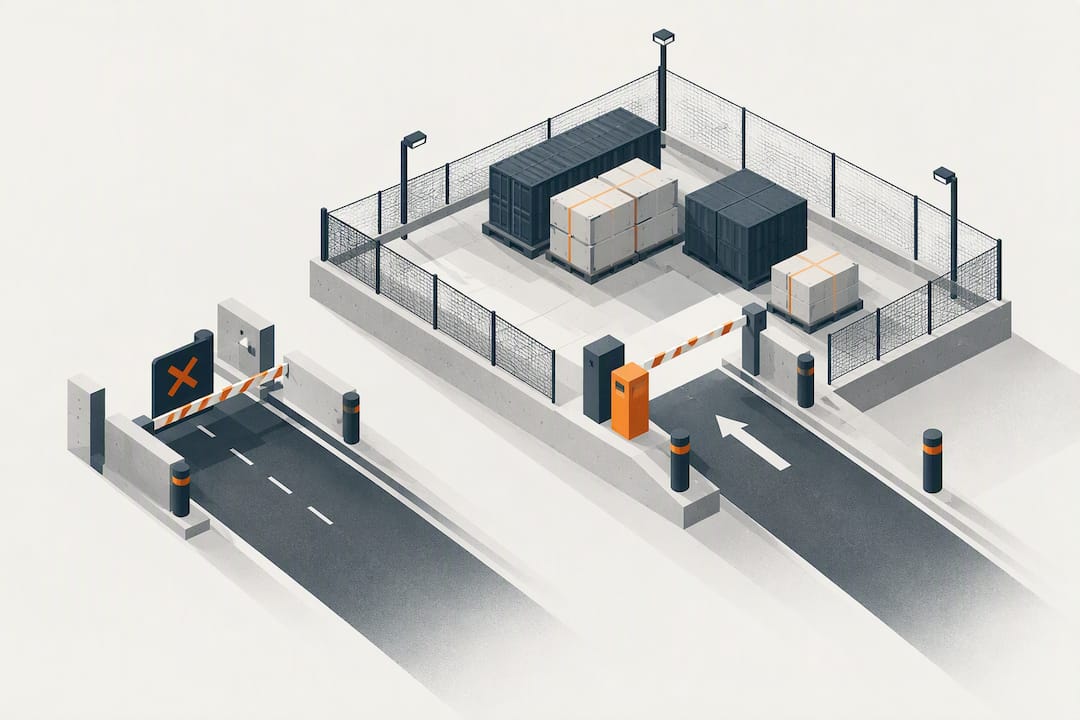
Preventing cargo theft today requires layered security built on three things: independent verification of anyone picking up a load, physical enforcement that keeps assets locked unless access is authorized, and disciplined procedures around seals and documentation. GPS tracking alone will not stop a determined thief. Thefts are often undetected until a tracking device reveals them, by which point the trailer is already gone.
TL;DR:
- Independent verification of pickup personnel and a second confirmation channel are essential to prevent fictitious pickups, especially for last-minute or unusual requests.
- GPS tracking should be combined with covert sensors, geofences, and escalation plans to ensure alerts lead to immediate action rather than just location monitoring.
- Physical security measures, including high-security seals, trailer immobilization, and secure parking lots, help reduce theft risk at stops and while parked.
- Organized crime groups are increasingly making selective, high-value thefts, with the CTPAT alert noting more incidents outside traditional hot spots near ports and rail yards.
- Layered security practices, such as documented protocols, regular tabletop exercises, and enforced custody control, can help close detection gaps and stop theft before it occurs.
Table of Contents
- Types of cargo theft and how criminals operate today
- Current trends and high-risk commodities
- Core prevention framework: a layered security checklist
- Verification, vetting and preventing fictitious pickups
- Technology: what helps, what doesn’t, and how to integrate tools
- Operational practices that reduce exposure at every stop
- Incident response, reporting, and industry protocols
- Execution-control approach: how identity-verified, on-asset enforcement stops modern theft
- Why the industry must shift from visibility to enforced custody control
- Next steps: evaluate execution-control options for your fleet
- Sources
- FAQ
Types of cargo theft and how criminals operate today
Straight theft is the oldest kind: someone breaks into a trailer or tractor parked at a truck stop or yard and drives off with the load. Strategic theft is different and harder to catch, relying on fictitious pickups, double-brokering, and impersonated carriers who show up with paperwork that looks legitimate. Pilferage, where small amounts of cargo disappear from a larger shipment, can involve insiders somewhere in the chain.
Cyber tactics now feed strategic theft directly. Compromised load-board accounts and spoofed carrier identities let criminals book real freight under a fake company name, then vanish with it before anyone notices the mismatch.
Operational red flags worth tracking:
- Unscheduled route deviations or unexplained stops outside approved zones
- Door-open sensor alerts during hours when the trailer should be sealed and moving
- Pickup requests with mismatched carrier details, last-minute changes, or unfamiliar drivers
- Duplicate load confirmations from two different carriers claiming the same shipment
Current trends and high-risk commodities
The scale of the problem has shifted fast. According to a 2026 IC3 advisory, estimated cargo-theft losses in the US and Canada climbed to nearly $725 million in 2025, up 60% from 2024, with the average value per theft rising 36% to $273,990.
Estimated cargo-theft losses rose 60% in 2025, according to the IC3 advisory. The CTPAT alert describes the shift as one from small-crew theft to sophisticated, strategic theft by organized crime rings, with high-value and selective targeting.
Food and beverage products led stolen commodity categories in TT Club and BSI’s 2025 cargo-theft report, followed by agriculture, electronics, automotive parts, construction materials, and metals, as reported by AJOT. The CTPAT alert likewise lists food and beverage, metals (especially copper), and enterprise computing hardware among high-value targets. It also notes more incidents outside traditional hot spots near ports and rail yards.
Core prevention framework: a layered security checklist
No single control stops every theft type. Layered security means stacking policy, hardware, verification, technology, and training so a failure in one layer gets caught by another.
- Policy and process: written procedures for load release, seal handling, and route risk assessments.
- Physical hardening: ISO 17712 high-security seals, barrier bars, reinforced door locks, and trailer immobilization devices.
- Verification and custody control: two-channel confirmation for every pickup and documented chain-of-custody records.
- Technology integration: GPS, geofencing, and covert sensors tied to a real escalation plan, not just a dashboard.
- Training and partnerships: recurring driver and dispatch training plus shared intelligence with other carriers and shippers.
The CTPAT alert on the cargo-theft surge recommends this kind of layering. It says CTPAT Members must keep written high-security seal procedures and written incident-reporting procedures, and it advises tabletop exercises twice a year.
Pro Tip: Run a tabletop exercise regularly (the CTPAT alert advises twice a year) where your team walks through a fictitious pickup attempt step by step; it can expose gaps in your verification chain.
Verification, vetting and preventing fictitious pickups
Fictitious pickups are a core tactic in strategic cargo theft, relying on deception and fraud. IC3 advises independently verifying shipment requests and pickups using secondary methods before releasing any load. Treat any unexpected or last-minute pickup request as a red flag requiring independent confirmation, not a favor to a driver in a hurry.
Before releasing a load, collect and verify:
- Driver photo ID matched against dispatch records
- License plate and truck number cross-checked with the booked carrier
- DOT and MC numbers verified against a source you control, not a number the driver provides
- A second confirmation channel, such as calling the carrier’s dispatch line directly rather than the number on the paperwork
Vet subcontracted carriers and consider contract clauses that assign clear liability for verification failures. The FMC’s 2024 Bentzel cargo-theft report notes that background checks and working with trusted partners are common defenses against insider-assisted and strategic theft.
Pro Tip: Never accept a phone number written on a bill of lading as verification; call the carrier’s published dispatch line instead.
Technology: what helps, what doesn’t, and how to integrate tools
GPS tracking has real limits. GPS alone tells you a load moved, not whether the move was authorized. The CTPAT alert notes that when thieves use stolen credentials to book legitimate loads, the theft is often undetected until tracking devices reveal it.
Covert sensors, door-open alarms, and geofencing add value when they are tied to an escalation playbook rather than left as passive alerts:
- Configure alert thresholds tight enough to matter, such as flagging an unscheduled stop outside an approved zone within minutes, not hours
- Test tracking devices before departure rather than assuming they are functioning, a step TAPA’s Trucking Security Requirements (TSR) address through documented function testing of tracking devices before departure
- Link sensor alerts directly to dispatch action, including immobilization where the hardware supports it, so an alert triggers a response instead of sitting in a queue
Operational practices that reduce exposure at every stop
Criminal groups target every link in the chain, including unsecured parking spaces and rest stops, according to BSI as reported by AJOT. Park loaded trailers only in approved, secured lots, never on unmonitored shoulders or open truck stops overnight.
- Avoid leaving a loaded trailer unattended for extended stretches, even at a familiar location
- Train drivers to recognize phishing attempts targeting load-board credentials and dispatch systems
- Build a pre-departure and pre-pickup checklist drivers complete every time, not just when something feels off
- Share intelligence with partner carriers and local law enforcement about attempted fictitious pickups in your lanes
Incident response, reporting, and industry protocols
When theft is suspected, speed determines whether you recover anything or just document a loss.
- Preserve the scene: where it is safe to do so, avoid disturbing the area until it is photographed.
- Immobilize the asset if the technology allows it, and notify dispatch and law enforcement immediately.
- Report cyber-enabled incidents to IC3 and file with local law enforcement. CTPAT’s alert advises notifying law enforcement as soon as feasibly possible.
- Preserve evidence: seal numbers, time-stamped photos, manifests, and any driver or dispatch communications tied to the load.
NMFTA’s prevention guidance stresses preparing to respond effectively so that recovery is more likely when theft happens. Building these steps into a standing checklist before an incident is one way to do that.
Execution-control approach: how identity-verified, on-asset enforcement stops modern theft
Detection often tells you a theft happened after the fact. Execution control aims to stop it from happening. This means combining trailer immobilization with a documented authorization workflow so that only an approved party can unlock or move an asset, addressing the fictitious-pickup vector that visibility-only tools struggle to reach.

Level5Fleet’s Admiral platform builds this approach around credentials presented directly to the trailer, which stays immobilized and locked unless access is authorized, with Resolve recording why each permission was granted or denied. Level5Fleet presented this argument in its MATS 2026 talk, which argued that visibility alone does not prevent unauthorized actions and that authorization should be enforceable at the point of execution.
Why the industry must shift from visibility to enforced custody control
Many security programs still stop at visibility: a dashboard, a map, an alert after the fact. That leaves a detection-to-action gap wide enough for a strategic thief to drive through. Shippers, carriers, and brokers need to align on shared standards like TAPA and CTPAT and start comparing notes on attempted fictitious pickups instead of treating every incident as isolated.
— Gwagsi
Next steps: evaluate execution-control options for your fleet
If your current program relies on GPS and manual verification calls, the gap that strategic thieves exploit may still be open. Some platforms address that gap directly with credentials presented to the asset, trailer immobilization unless access is authorized, and a record of why each permission was granted or denied.
A useful starting point is a straightforward security audit of your current pickup and verification workflow, then a look at how Admiral by Level5Fleet applies enforcement at the trailer level rather than after the fact. Review the Admiral Resolve product page to learn about the Enforce Pilot.
Sources
- Internet Crime Complaint Center (IC3) | Cyber-Enabled Strategic Cargo Theft Surging
- CTPAT alert — surge in cargo theft and security best practices
- Cargo Theft Prevention: Tips to Protect Your Cargo – NMFTA
- TT Club / BSI cargo-theft report 2025
- 2024 cargo theft report (FMC Commissioner Carl Bentzel)
FAQ
Which strategies help prevent cargo theft most effectively?
Layered security combining identity verification of pickup parties, physical enforcement like trailer immobilization, and disciplined seal and documentation procedures addresses both opportunistic and strategic theft. GPS tracking alone is not enough, since it often identifies a loss only after the trailer has already moved.
Do cargo covers prevent theft?
Cargo covers and tarps may reduce visibility of valuable freight, but they do little against strategic theft involving fictitious pickups or insider access. They work best as one layer within physical hardening measures, not as a standalone solution.
What is the best method to prevent cargo theft?
There is no single best method: effective prevention combines verified pickup procedures, on-asset enforcement such as immobilization, and ISO 17712 high-security seals. The CTPAT alert recommends a layered approach and tells members to secure shipments that can be sealed with ISO 17712-compliant high-security seals.
What is the most stolen cargo?
Food and beverage products led stolen commodity categories in TT Club and BSI’s 2025 report, followed by agriculture, electronics, automotive parts, construction materials, and metals.